Download A Natural History of the Romance Novel
By visiting the link, you can make the take care of the website to obtain the soft documents. Ever mind, there is no distinction in between this type of soft data book as well as the printed book. It will certainly set apart only in the types. And also what you will also obtain from A Natural History Of The Romance Novel soft data is that it will instruct you ways to live your life, ways to boost your life, as well as the best ways to guide to be better.
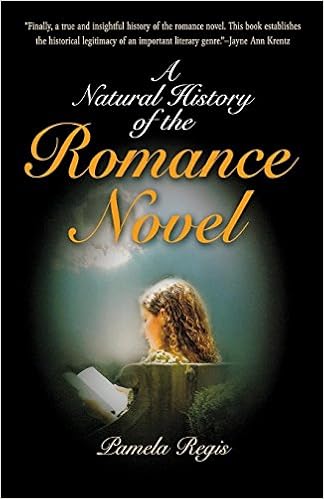
A Natural History of the Romance Novel

Download A Natural History of the Romance Novel
What's matter with you? Do you not mind to do anything in your leisure time? Well, we assume that you need something new to acquire the present time currently. It is not kind of you to do absolutely nothing in your free time. Also you require some enjoyable relaxes; it doesn't mean that your time is for idleness. Were truly certain that you require additional thing to accompany your leisure time, do not you?
Attaching to the web and also beginning to make handle getting this publication can be done while having other work or working or being someplace. Why? This moment, it is really simple for you to connect net. When you want to get the book while doing various other tasks, you can check out the web link as in this internet site. It verifies that A Natural History Of The Romance Novel is very simple to get through visiting this website.
Are you still puzzled why should be this book? After having terrific task, you could not require something that is really tough. This is exactly what we say as the reasonable book to review. It will not just offer home entertainment for you. It will certainly offer life lesson behind the entertaining features. From this instance, it is certainly that this book is appropriate for you as well as for all people that need basic and also fun book to check out.
Collect guide A Natural History Of The Romance Novel start from now. However the extra means is by gathering the soft file of guide A Natural History Of The Romance Novel Taking the soft file can be conserved or kept in computer system or in your laptop computer. So, it can be greater than a book A Natural History Of The Romance Novel that you have. The simplest method to disclose is that you could additionally save the soft data of A Natural History Of The Romance Novel in your ideal and also readily available device. This problem will intend you too often review A Natural History Of The Romance Novel in the spare times more than chatting or gossiping. It will certainly not make you have bad habit, yet it will lead you to have much better behavior to review book A Natural History Of The Romance Novel.
Review
"Finally, a true and insightful history of the romance novel. This book establishes the historical legitimacy of an important literary genre."—Jayne Ann Krentz"Regis sets out to analyse the formal features and literary history of this much-maligned genre. . . . A thorough, sensible, and partisan book, arguing for romantic fiction as a genre that celebrates freedom of choice."—Times Literary Supplement"Useful to those interested in the form and integrity of romance fiction, this volume joins such noteworthy examinations of the romance as Tania Modleski's Loving with a Vengeance and Janice Radway's Reading the Romance."—Choice
Read more
About the Author
Pamela Regis is Professor of English at McDaniel College and the author of Describing Early America: Bartram, Jefferson, Crevecoeur, and the Influence of Natural History, also available from the University of Pennsylvania Press. She is the receipient of the 2007 Melinda Helfer Fairy Godmother Award.
Read more
Product details
Paperback: 240 pages
Publisher: University of Pennsylvania Press (April 26, 2007)
Language: English
ISBN-10: 9780812215229
ISBN-13: 978-0812215229
ASIN: 0812215222
Product Dimensions:
5.5 x 0.6 x 8.5 inches
Shipping Weight: 7 ounces (View shipping rates and policies)
Average Customer Review:
3.4 out of 5 stars
6 customer reviews
Amazon Best Sellers Rank:
#562,996 in Books (See Top 100 in Books)
This is a great book about romance novels, what they are, what they are not, and how they can be traced from Richardson and Austin clear through to the 20th century. A serious study and jumping off point for anyone wanting to do scholarly research.
This book is copyrighted 2003, and in light of Nora Roberts’ being named by TIME (2007) as one of the 100 Most Influential People of that year, as well as romance writers being regularly reviewed, its premise is somewhat out of date.Author Pamela Regis does a fairly good job of giving a(n) historical perspective of the romance novel. Her chronology and commentary are in line with various books I’ve read on the history of both the English and the American novel in general. However, I have several objections to her conclusions about Samuel Richardson and his novel Pamela, purported to be the first true romance novel in the English language.Pamela was published in 1740; and it was a very early novel. The novel's form hadn’t been “decided upon†yet; it is true that Richardson (along with Henry Fielding and Tobias Smollet) were aware that they were creating a new literary genre: long prose narratives that were NOT allegorical or satirical. Fielding called the new form “the comic prose epic.†The new genre told the stories of everyday life of the time, imbued with the emotions thought proper at the time. To attribute to Richardson a conscious knowledge of what Regis states are “the eight elements†that every romance must have is mistaken. Richardson told his story of “everyday life†(which I can’t help but think wasn’t everyday life) in a way that rested on centuries of poetic romances—AND included thoughts and feelings prevalent in his time.Yes, Pamela was a runaway best seller for its time, but so was every other of the half dozen or so early novels published at the time. The novel was a new and different form of literature: a growing literate middle class was ready for something new and different. Pamela didn’t necessarily sell well because of its genre, but because of its newness.Along with several other reviewers on here, I totally disagree with Regis’s pronouncement that Pamela was not oppressive: she’s kidnapped, denied her wages, moved from castle to castle at the whim of her captor, threatened with rape several times, is so distraught that she contemplates suicide. If that’s not oppressive, what is? And then, according to Regis, when her behavior suddenly convinces the “hero†that he loves her for steadfastly refusing his “advances,†she loves him because he loves her???I also disagree with the author’s insistence that strict adherence to a 275+ year old model produces good writing and/or literature. “Freedom to choose a man†is hardly freedom to choose; it’s part of the patriarchal system that’s in place. However, boy and girl hook up with a Happily-Ever-After ending is apparently the only definition of romance that’s acceptable—and if the writers of that genre insist on that definition, how can they rail at readers who get bored with it?The other glaring argument that doesn’t hold water, as far as I can see, is that romance as a genre deserves more respect, which Regis supports with the following examples: Pride and Prejudice, Jane Eyre, Framley Parsonage, A Room With A View, and the authors Georgette Heyer, Mary Stewart, Janet Daily, Jayne Anne Krentz, and Nora Roberts. With the exception of Janet Daily (whom I tried to read and found mawkishly sentimental), the novels listed get the respect they deserve because they are well written. Each author is a cracking good story teller with the skills of description, characterization, and tight plotting on display in their novels.The claim that romance as a genre doesn’t get the respect it deserves rings false. If the writer is good, s/he gets respect. If a writer isn’t good or doesn’t try to improve, why should they get applause? It’s a known fact that romance is the number one best-selling genre in publishing; what is it—9 or 10 thousand romance novels get published every year? However, just as in other genres, quantity does not equal quality: most of the stories are banal, clichéd, and trite to embarrassment. Even Roberts and Krentz get a little wearing after 30 or 40 books that follow the eight-element model and “free the heroine to choose the man.â€I don’t read much romance any more, but then I don’t read as much science fiction or mystery as I used to. I’ve been reading for 50+ years, and now I want more than the SOS (same old schlock). There’s plenty of excellent nonfiction out there, and there’s Jennifer Crusie, Sue Grafton, Deborah Crombie, Lois McMaster Bujold, Elizabeth Peters, Mary Stewart, Georgette Heyer and other classics of well-written romance. Fifty Shades of Gray? The $.99 special from Kindle? Not so much. . .
Pamela Regis' book, A Natural History of the Romance Novel, is a remarkable example of circular reasoning in literary analysis. She sets up a very specific definition of the concept "romance novel" -- namely "a work of prose fiction that tells the story of the courtship and betrothal of one or more heroines."In Chapter 4, The Definition Expanded, she then narrows this definition by defining eight aspects which she perceives as necessary to the form: Society Defined, The Meeting, The Barrier, The Attraction, The Declaration, Point of Ritual Death, The Recognition, and The Betrothal.It should be noted that in this context, she presumes that the "betrothal" will occur between the hero and heroine, thus eliminating from the "romance novel" category an immensely popular work such as Anthony Hope's 1895 The Prisoner of Zenda, which followed the trope of love between hero and heroine sacrificed to the more imperative needs of honor and duty.Given these tight limits on what the author is willing to consider to be a "romance novel," she focuses on tracing the form from Joseph Richardson's 18th century epistolary blockbuster, Pamela, through Jane Austen, Charlotte Bronte, and other selected 19th century authors, picking up Georgette Heyer in the first half of the 20th century, and continuing through Janet Dailey, Jayne Ann Krentz, and Nora Roberts.From the perspective of the historian rather than the literary critic, the major deficiency of the book lies in its lack of attention to authors who, in their own time, were blockbuster bestsellers. While she explains why Daphne du Maurier's Rebecca and Margaret Mitchell's Gone with the Wind do not meet the criteria she has adopted for being "romance novels" (Chapter 5, The Genre's Limits), she still ignores completely quite a number of writers who were, in their own day, multi-title blockbusters in the romance field, such as George Barr McCutcheon, although devoting a full chapter to his contemporary E.M. Forster's 1908 A Room with a view.A better title than "Natural History" of the romance novel would have been "Literary Analysis" of the romance novel.
As a long-time fan of this genre, I expected more from this book. However, it was too academic, spent too long on only a few authors and didn't add anything to my understanding. The author spent quite a bit of time reviewing plot details and I admit that I enjoyed her analysis of Nora Roberts and Jayne Krentz books that I had read, but there was too much detail and repetition.There must be better books out there....and I'd love to read any suggestions.
A Natural History of the Romance Novel PDF
A Natural History of the Romance Novel EPub
A Natural History of the Romance Novel Doc
A Natural History of the Romance Novel iBooks
A Natural History of the Romance Novel rtf
A Natural History of the Romance Novel Mobipocket
A Natural History of the Romance Novel Kindle



0 komentar:
Posting Komentar